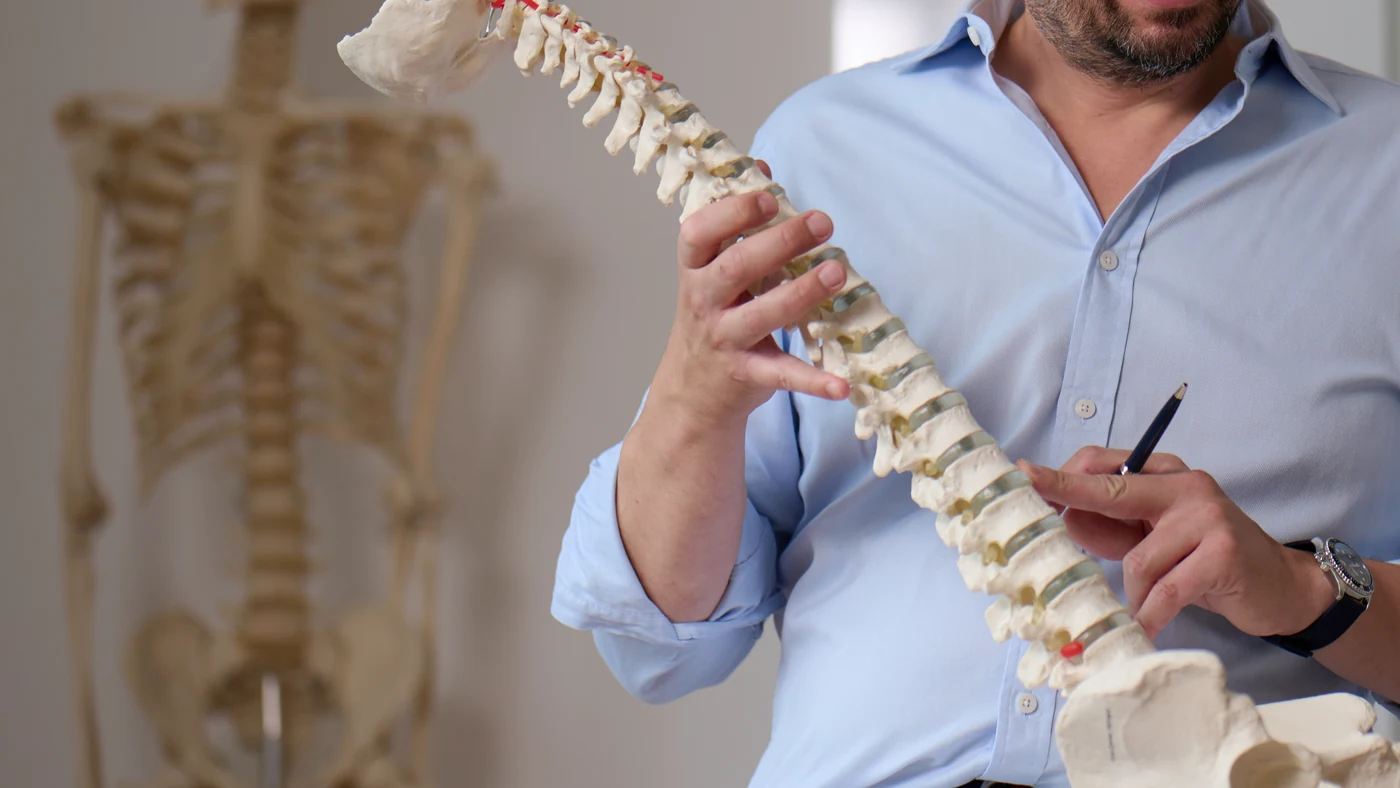
Treating changes in posture and joints in Munich
If your posture changes, a joint swells or movements become more difficult, an orthopaedic examination can help to assess these changes. At our private practice in Munich-Altperlach, Dr. Schettle examines your joints, your spine and your muscles. Together you discuss whether treatment makes sense and how you can support your mobility.
How are posture and joints examined?
Dr. Schettle asks when you first noticed the change, which movements have become more difficult and which strains shape your everyday life, such as working at a screen, using a smartphone or one-sided activities at work. He then examines your posture when standing and sitting, the mobility of your spine and joints, and your muscles.
In doing so, we look at your musculoskeletal system as a whole. A protective posture may point to a previously unrecognised condition, and a change in a joint may point to a joint disease such as osteoarthritis. Dr. Schettle checks for this during the examination as well.
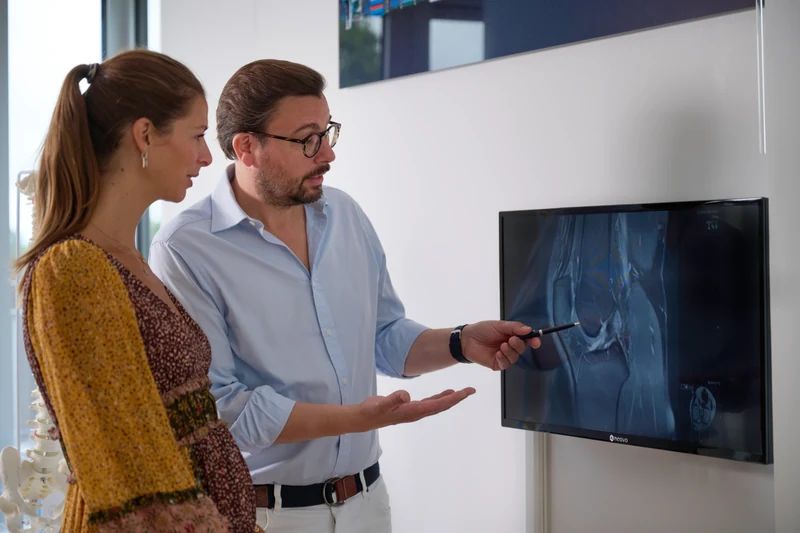
Depending on the findings, ultrasound, X-ray or MRI complement the examination. The radiology practice is in the same building. Posture and the shape of the spine can also be recorded with a digital measurement that uses no X-rays.
Typical changes at a glance
Changes in posture and joints can have various causes. These include one-sided strain, muscular factors and diseases of the musculoskeletal system. Whether treatment is needed depends on the findings and your symptoms.
Rounded back and forward head posture
Increased curvature of the upper back or a forward head posture can have various causes. Dr. Schettle checks how mobile your spine is and whether muscular factors or structural changes play a role.
Overloaded thumbs and hands
Frequent typing on a smartphone can strain the tendons and joints of the thumb, colloquially known as “smartphone thumb”.
Protective posture
If you avoid pain, you unconsciously change your posture and movements. Over time, this can put strain on other areas.
Changes in joints
Swelling, deformity or declining mobility of a joint, for example in osteoarthritis.
Improving mobility, relieving symptoms
What the treatment looks like depends on the cause. If a condition such as osteoarthritis lies behind the change, Dr. Schettle tailors the treatment accordingly.
For changes in posture caused by one-sided strain, the focus is on movement, targeted exercises and, if needed, physiotherapy. Together you discuss how to set up your workplace and how to build regular movement breaks into your everyday life.
The aim is to relieve existing symptoms, to maintain or improve your mobility and to make everyday movements easier for you. Dr. Schettle discusses with you which changes can be expected from the treatment and where its limits lie.
Book an appointment for an examination
Online or by phone, at our practice in Munich-Altperlach.