Treating knee and hip pain in Munich
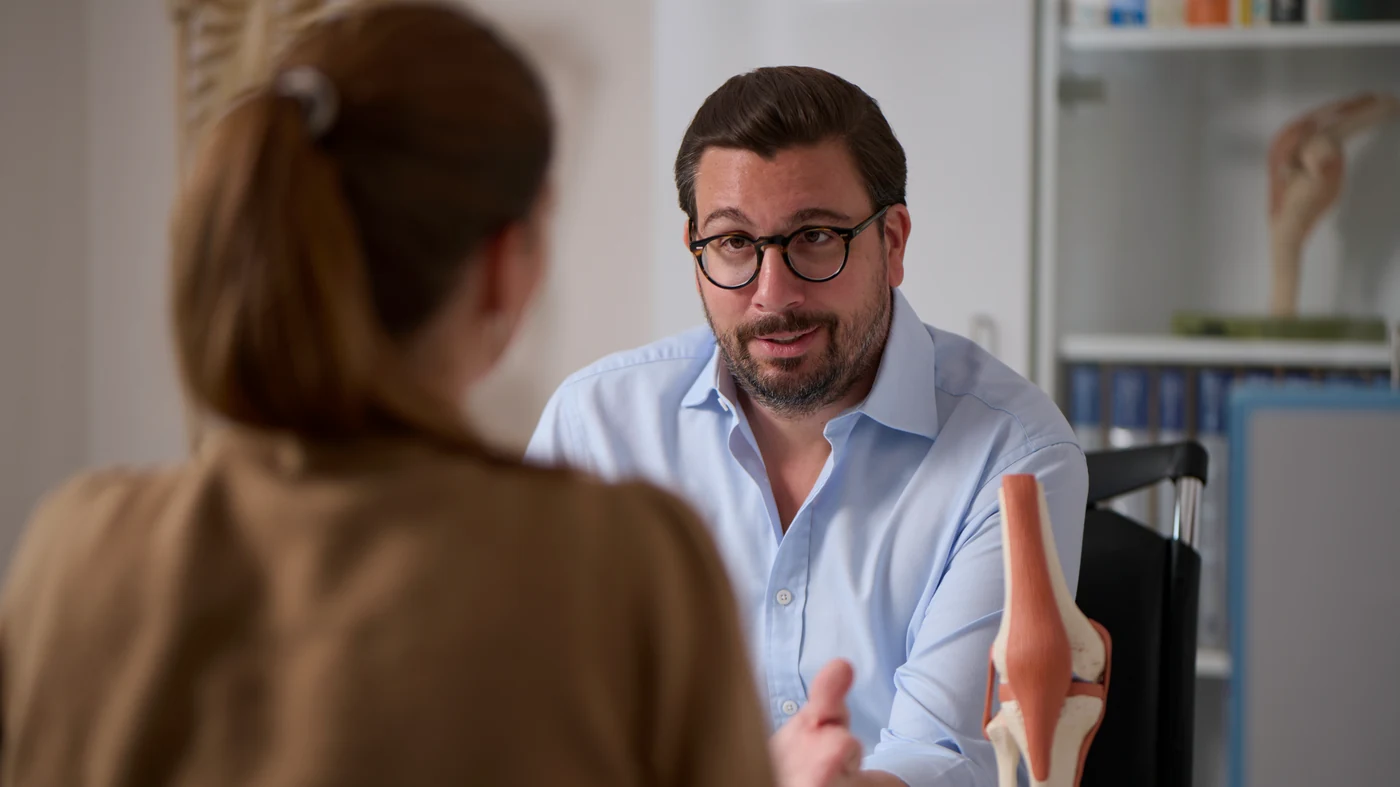
Knee and hip pain often shows when climbing stairs, getting up from a seated position or after walking for a long time. At our private orthopaedic practice in Munich-Altperlach, Dr. Schettle examines you personally and discusses with you which treatment without surgery may be suitable. Our aim is to assess your symptoms at an early stage, relieve pain and maintain the function of your own joints for as long as possible.
How are the knee and hip examined?
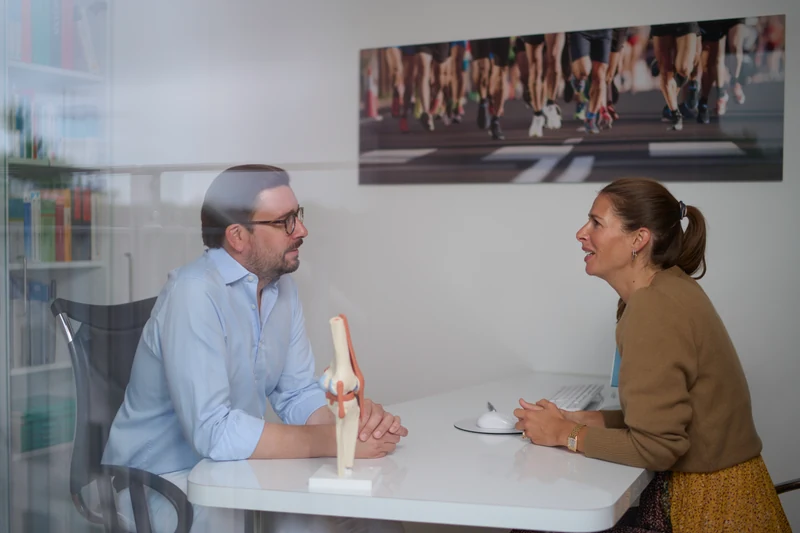
It starts with a conversation. Dr. Schettle asks when the pain occurs, for example when climbing stairs, after sitting for a long time or under strain, and whether the joint swells, locks or feels unstable. He then examines the mobility and stability of the joints, your leg alignment and your gait.
Whether imaging is needed depends on the findings. If osteoarthritis is suspected, an X-ray is often sufficient. An MRI is mainly considered if the meniscus, ligaments or cartilage might be injured. The radiology department is in the same building.
If there are signs of incorrect loading, a digital gait and posture analysis can complement the examination.
Complaints and findings at a glance
Knee pain
Knee osteoarthritis
Wear of the knee joint (gonarthrosis), including behind the kneecap.
Cartilage damage
Injured or worn joint cartilage, often with pain under strain.
Meniscus tear and meniscal wear
Tears or wear of the menisci, the cushions between the thigh bone and the shin bone.
Ligament tears
Injuries to the cruciate or collateral ligaments, often after sport or a fall.
Patellar dislocation
The kneecap slips out of its groove.
Leg malalignment
Knock knees or bow legs, which place uneven strain on the knee.
Hip pain
Hip osteoarthritis
Wear of the hip joint (coxarthrosis), often with pain in the groin.
Hip impingement
The femoral head and the socket knock against each other during certain movements.
Bursitis of the hip
Inflamed bursa on the outer side of the hip (trochanteric bursitis).
Postural imbalance
Unfavourable loading of the pelvis and hip, for example due to legs of different lengths.
Can hip pain radiate into the knee?
Yes. Many patients feel hip problems in the groin, the thigh or even the knee. Conversely, a painful knee can change your gait and place additional strain on the hip. This is why Dr. Schettle also examines the hip in cases of knee pain, and the knee in cases of hip pain.
Relieving knee and hip pain without surgery
Treatment depends on the cause of your pain and on how severely you are restricted in everyday life. Dr. Schettle puts together an individual treatment plan with you.
For knee or hip osteoarthritis, physiotherapy and targeted strengthening are among the important components. Depending on the findings, aids such as orthoses or interventional pain therapy may complement the treatment. Dr. Schettle will also advise you on the bioregenerative procedures offered at our practice and explain their benefits, limitations and possible risks.
Joint wear that has already occurred cannot be reversed. With combined conservative osteoarthritis therapy, we aim to relieve pain, improve your mobility and maintain the function of your joints for as long as possible.
Should surgery be advisable, we will discuss this openly with you and support you before and after the procedure.
Further treatment depending on the findings
Book an appointment for knee or hip pain
Online or by phone, at our practice in Munich-Altperlach.