Treating shoulder pain in Munich
Shoulder pain often results from overuse during sport and work or after a fall. Typical signs are pain when raising the arm, pain at night when lying on the shoulder, or restricted mobility. At our private orthopaedic practice in Munich-Altperlach, Dr. Schettle examines you personally and discusses with you which treatment without surgery may be suitable.
How is the shoulder examined?
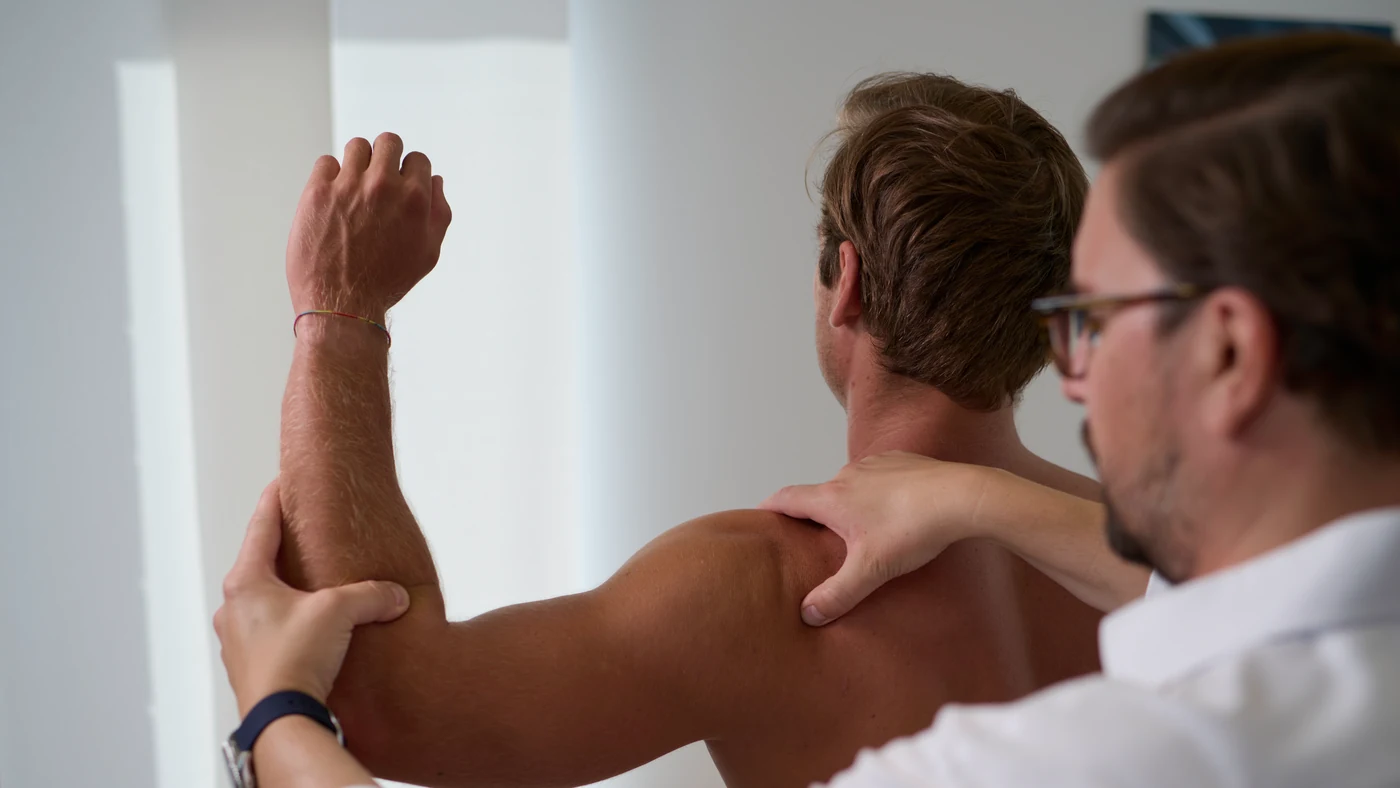
Dr. Schettle asks how long you have had the pain, during which movements it occurs and whether it was preceded by an accident. Using functional tests, he checks the mobility, strength and stability of the shoulder and which movement triggers the pain.
Depending on the findings, ultrasound, X-ray or an MRI can provide further information, for example if an injured tendon is suspected. The radiology department is in the same building.

Complaints and findings in the shoulder and elbow
Impingement syndrome
Tendons or bursae become compressed when the arm is raised. Pain within a particular arc of movement is typical.
Shoulder tendon damage (rotator cuff)
Irritation or tears of the tendons that guide and stabilise the shoulder joint.
Calcific shoulder (calcific tendinitis)
Calcium deposits in a tendon, which can suddenly become very painful.
Frozen shoulder
The joint capsule is inflamed and contracts, and the shoulder can barely be moved. The condition may last from many months to several years.
Bursitis
An irritated bursa beneath the roof of the shoulder, often due to overuse.
Shoulder instability
The shoulder feels unstable or slips out easily, often after a dislocation.
Shoulder osteoarthritis (omarthrosis)
Wear of the shoulder joint, which can cause pain and restricted mobility.
Tennis elbow and golfer's elbow (epicondylitis)
Overloaded tendon attachments at the elbow, for example due to sport or repetitive work.
Conservative treatment of shoulder pain
Before any decision on surgery, we carefully assess which conservative options are advisable for you. Dr. Schettle tailors the treatment to your findings, your symptoms and the demands of your everyday life, work and sport.
Depending on the condition, the treatment plan includes physiotherapy, adapted exercises and measures to relieve pain. The aim is to improve the mobility and strength of your shoulder so that you can use your arm better again in everyday life. We also discuss which strains you should temporarily reduce and how you can keep moving your shoulder.
Complementary procedures are selected according to the individual findings. In the case of a calcific shoulder, for example, Dr. Schettle will also advise you on shockwave therapy and explain its possible benefits and limitations.
Some shoulder conditions take time. We discuss the expected course with you and check whether the treatment should be adjusted. If surgery is advisable, we explain the reasons to you and support you before and after the procedure.
Further treatment depending on the findings
Book an appointment for shoulder pain
Book your appointment at our practice in Munich-Altperlach online or give us a call.