Treating muscle tension in Munich
Muscle tension can occur in many parts of the body, particularly often in the neck, shoulders and upper back. At our private orthopaedic practice in Munich-Altperlach, Dr. Schettle examines you personally and looks for the causes together with you. Together you discuss how the tension can be released and what you yourself can do to help.
How is muscle tension examined?
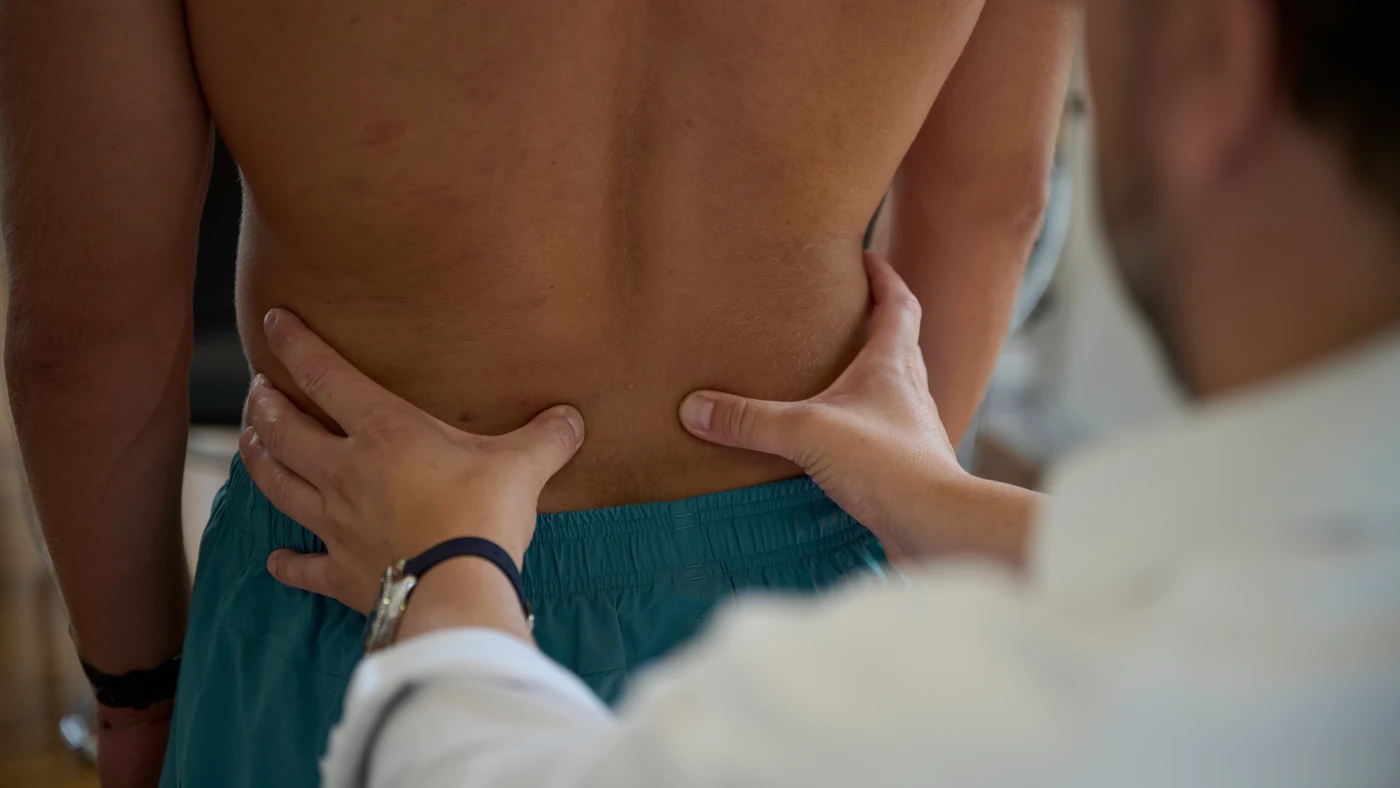
Dr. Schettle asks where and since when you have had the symptoms and when they get worse, for example when working at a desk, during sport or in stressful periods. He then examines your posture and mobility and palpates the muscles for hardened and tender areas.
In doing so, we look at your musculoskeletal system as a whole. Muscle tension can also be a reaction to another cause, such as problems with the spine or joints. Dr. Schettle checks this as well during the examination.
Imaging is only a next step if the findings or the course of your symptoms suggest it.

What can contribute to muscle tension?
With muscle tension, several factors often work together. These include physical strain, movement habits and psychological stress.
One-sided strain in everyday life
Working for long periods at a computer or on a smartphone can place uniform strain on the neck, shoulders and back over an extended period.
Lack of exercise
A lack of movement and regular changes of position can encourage symptoms.
Unaccustomed strain during sport
Very intensive, unaccustomed or one-sided training loads can overtax the muscles.
Stress and tension
Psychological strain can also make itself felt physically and intensify muscular complaints.
Releasing tension, addressing the causes
In the case of persistent or recurring muscle tension, Dr. Schettle examines which strains and possible concomitant conditions contribute to your symptoms. He then tailors the treatment to these together with you.
The focus is on movement, targeted exercises and, if necessary, physiotherapy. Suitable pain management can make it easier to become active again.
Together you discuss which changes can be put into practice in your everyday life: exercises, regular movement breaks and adjustments to your workplace. If stress plays a role, options for relaxation and recovery are also taken into account. The aim is to improve your mobility and, as far as possible, prevent symptoms from recurring.
Book an appointment for muscle tension
Online or by phone, at our practice in Munich-Altperlach.