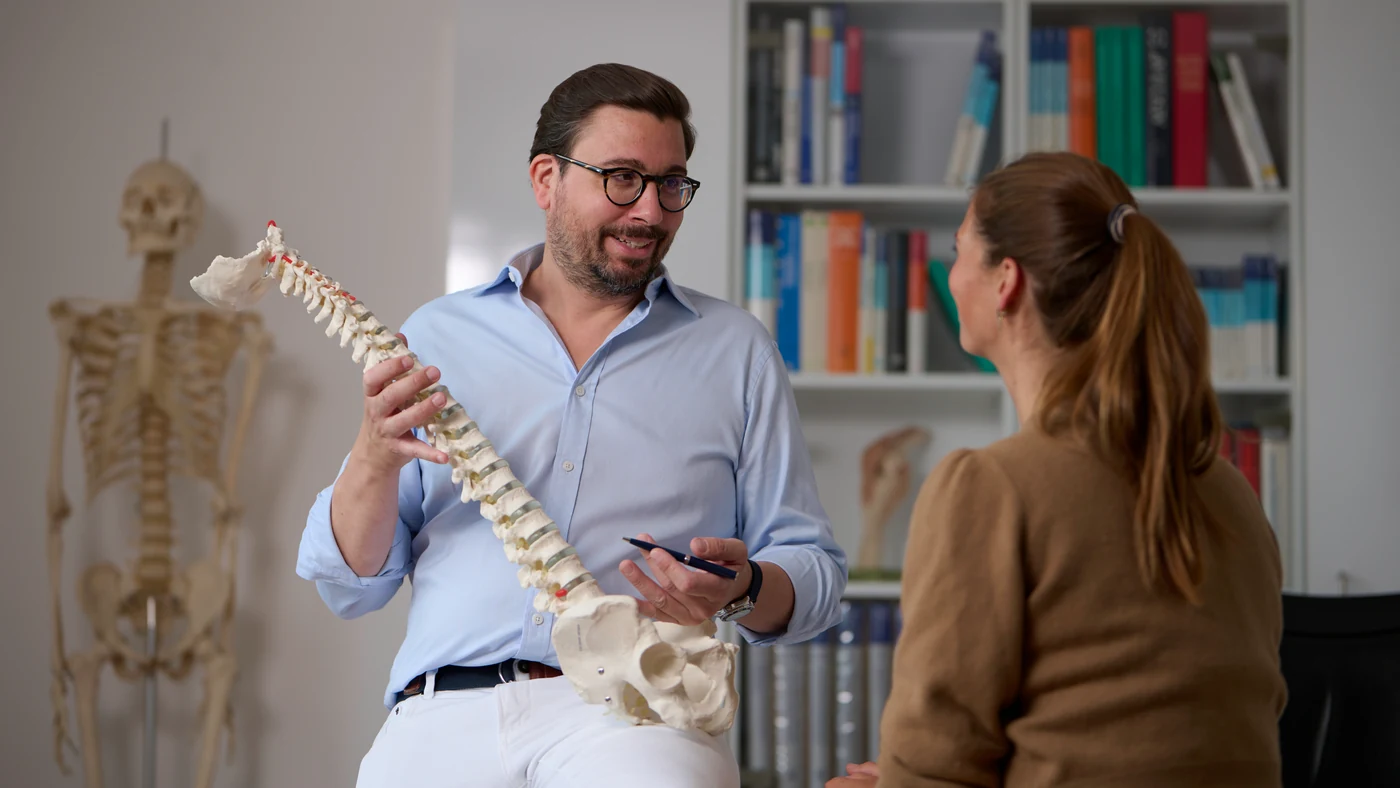
Treating neck pain in Munich
Sitting at a desk for long periods, frequently looking down at your smartphone or stress can lead to tension in the neck. The pain often radiates into the shoulder, arm or head, and turning the head is restricted. At our private orthopaedic practice in Munich-Altperlach, Dr. Schettle examines you personally and discusses with you which treatment without surgery may be suitable.
How is neck pain examined?
Dr. Schettle asks how long you have had the pain, during which movements it occurs and whether it radiates into the shoulder, arm or head. It is also important to know whether you experience numbness or tingling in your fingers and whether an accident preceded the pain. He then examines your posture, the mobility of the cervical spine and the muscles, and if necessary also strength, sensation and reflexes in the arms.
In doing so, we look at your musculoskeletal system as a whole. We take into account how the spine, shoulders and muscles work together and which strains at work and in everyday life may contribute to your symptoms.
Imaging such as X-ray or MRI is a possible next step if the findings or the course of your symptoms suggest it. The radiology department is in the same building. If there are questions about your posture, a digital gait and posture analysis can complement the examination.

Possible causes at a glance
Neck pain can be caused by various factors. Muscle tension, one-sided strain and stress often play a combined role. It is not always possible to identify a single cause. During the examination, Dr. Schettle also checks whether an injury or illness lies behind your symptoms.
Muscle tension
Tense, tender muscles in the neck and shoulder area. One-sided strain, lack of exercise and stress can contribute to this.
Whiplash (cervical spine sprain)
A strain of the cervical spine, for example after a rear-end collision or a fall.
Herniated disc in the cervical spine
Disc tissue presses on a nerve root. The pain may radiate into the arm, often with tingling or numbness in the fingers.
Osteoarthritis of the cervical spine
Wear of the small facet joints, which can cause pain and restricted mobility.
Vertebral injuries and fractures
After an accident, injuries to the cervical spine may be behind the symptoms. Osteoporosis increases the risk of fractures.
Rheumatic diseases
Inflammatory diseases that can also affect the joints of the cervical spine.
Scoliosis
A sideways curvature of the spine, which can lead to incorrect loading extending up to the neck.
Treating neck pain without surgery
Dr. Schettle works with you to develop a treatment plan that suits your symptoms and the examination results. For muscular and non-specific neck pain, the focus is on movement, targeted exercises and, if necessary, physiotherapy. Suitable pain management can make it easier to become active again.
For certain causes, interventional pain therapy with image-guided injections may also be considered. Dr. Schettle will discuss with you, on the basis of your findings, whether this procedure is advisable for you.
As neck pain is often linked to posture and habits, we also talk about your everyday life: how you sit at your workplace, how much time you spend in front of a screen and how you can build in breaks and movement. The aim is for you to move more freely again and for your symptoms not to return so easily. Should surgery be necessary, we will support you before and after the procedure.
Complementary diagnostics and treatment
Book an appointment for neck pain
Online or by phone, at our practice in Munich-Altperlach.